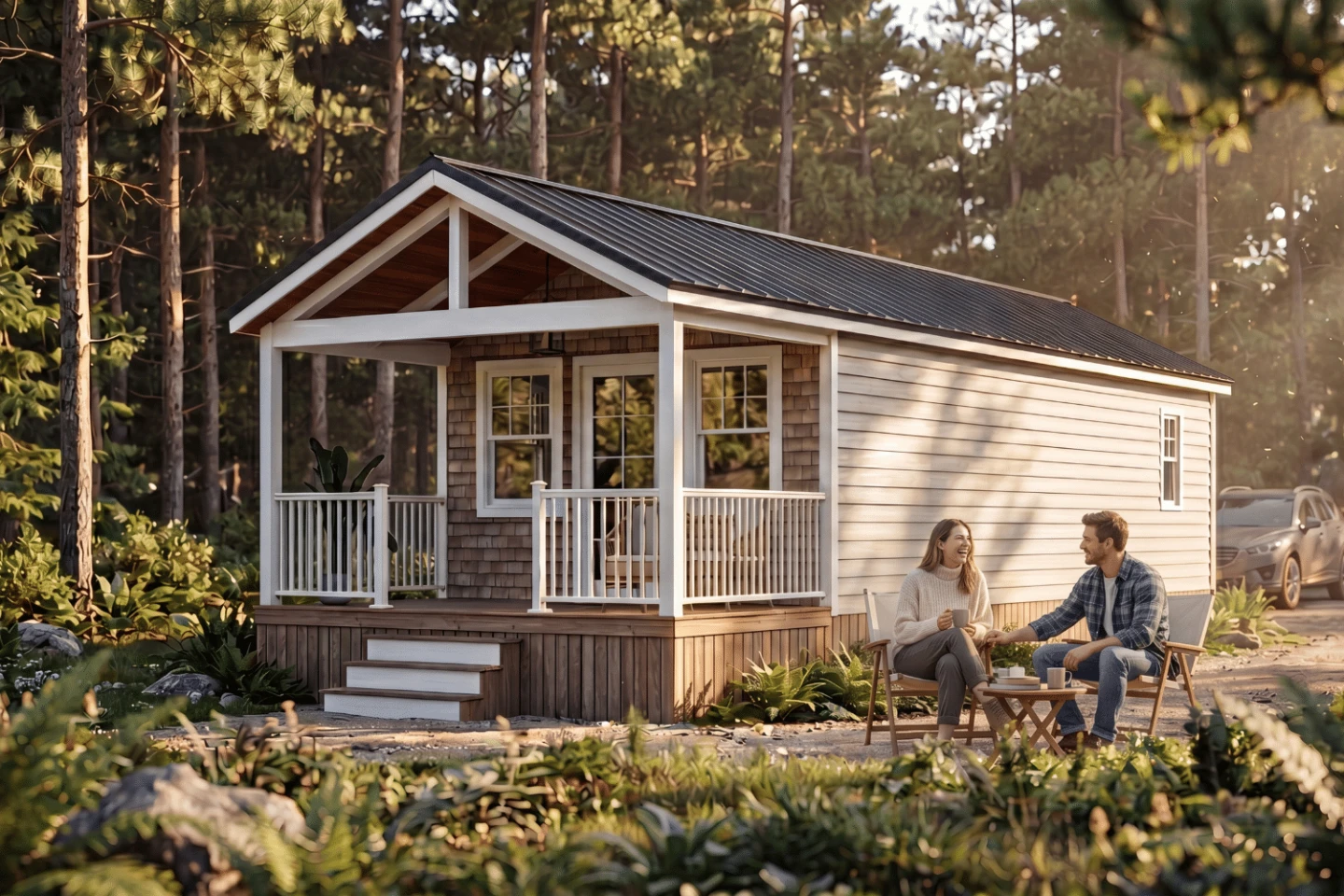
There's a particular joy in watching a product refuse to be what its label promises, and this park model cottage is exactly that kind of stubborn. It rolls up to the tiny house party with a porch that does all the bragging, and honestly, the porch has every right to be loud. This isn't a micro-dwelling designed to make you feel clever about composting; it's a small cottage on wheels, arranged entirely on one level, with an interior that lets the light pour through like it's showing off. We've seen the genre stretch before, like with Acadia mocks the word tiny with two baths and a single-floor sprawl, which laughs at the very notion of a footprint. This one doesn't laugh. It just settles in, opens its arms, and asks why you're still squinting at the spec sheet when you could be napping on the porch.
But here's where Spoot starts circling the foundation, because the word "tiny" is doing some heavy lifting that borders on the dishonest. This isn't a criticism of the build; it's a criticism of the category. If you're shopping for a house that you can legally park in a friend's backyard or a scenic lot without pulling a permanent permit, this cottage fits. If you're looking for something that forces you to live with less, this is not it. It's spacious, it's open, and it's entirely single-level, which makes it a clever option for someone who wants the vibe of a cabin without the stairs. The practical takeaway here is refreshingly simple: don't buy the label, buy the layout. We'd tell a friend that if they're drawn to this, they should measure their actual needs against the porch's square footage, not the marketing copy's promises. It's a home for people who want the *feeling* of tiny living, not the constraint of it.
That's also why we keep circling back to the broader pattern in our coverage. Just last week we saw a car-topped pop-up unfurls into an off-grid A-frame in hours, which is a completely different beast: a temporary, wild, take-it-with-you structure that weighs nothing and promises nothing permanent. This cottage is the polar opposite. It's heavy, it's rooted despite the wheels, and it asks you to commit to a lifestyle rather than an adventure. One is a weekend fling; the other is a long-term relationship with a generous deck. The contrast is useful because it reminds us that "tiny" has split into two distinct species: the mobile experiment and the stationary retreat. This one is firmly in the latter camp, and it's better for it. The open, light-filled interior does the work that a hundred clever storage hacks try to fake in lesser builds.
So what would we tell a reader who's actually tempted? Go see the porch in person before you trust the renderings. The real question isn't whether this is a tiny house, because it isn't. The question is whether you want a cottage that happens to be on wheels, and whether you're willing to admit that to yourself when someone asks why you didn't just buy a bungalow. The honest answer might be that the wheels are just a legal workaround, and there's nothing wrong with that. But the moment you stop pretending it's something it's not, you can actually enjoy the thing it is: a damn comfortable, light-soaked room that you can tow. Watch the fine print on the dimensions, though, because the only thing smaller than the house here is the gap between what people expect and what they get. That gap is where the real story lives, and it's the detail we'll be watching when the next "tiny" thing rolls off the lot.