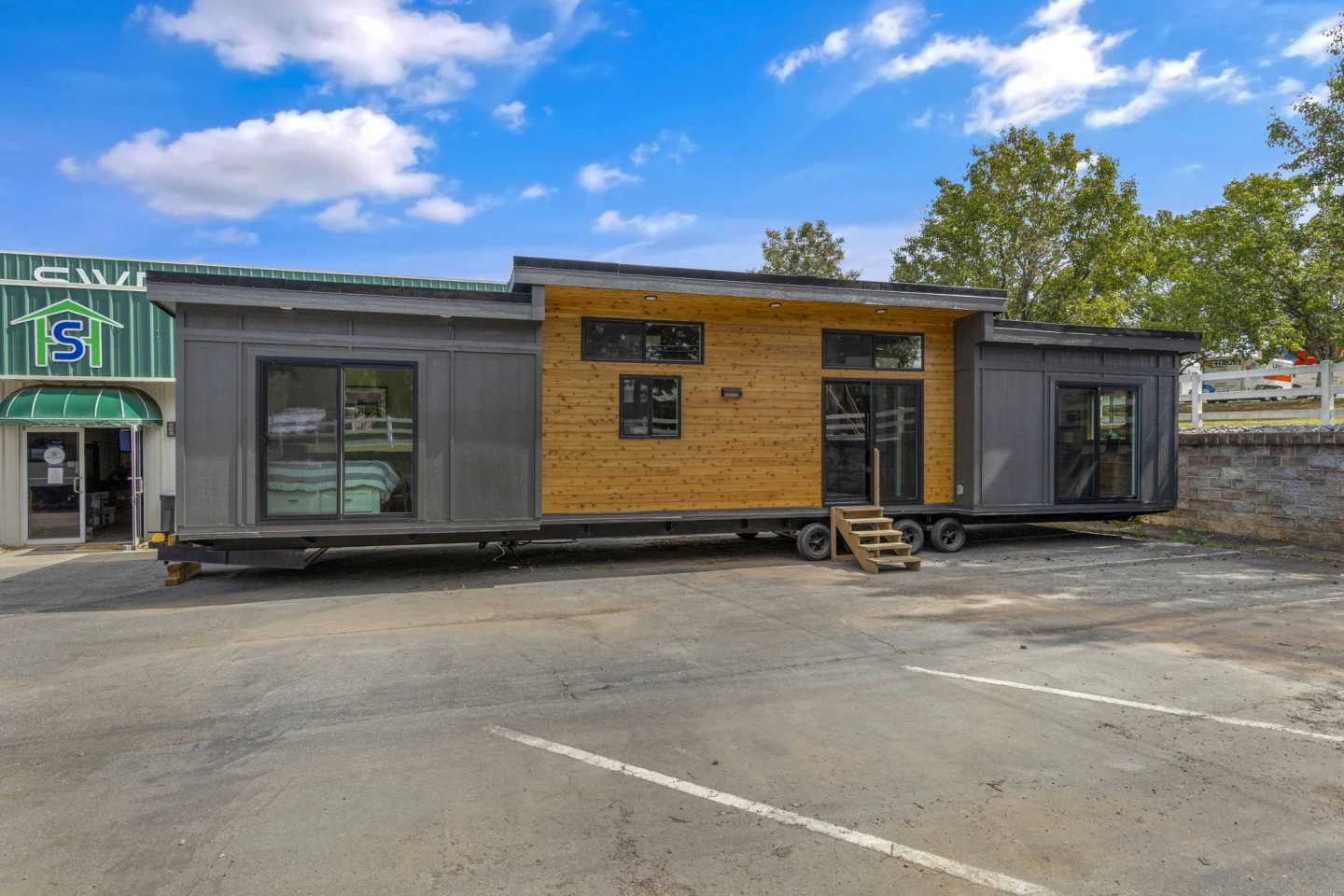
There's a point where "tiny" stops being a description and starts being a dare. The Acadia tiny house looks at that dare and yawns, then stretches out across a single floor with two bedrooms and two bathrooms like it's daring you to call it cramped. You could quibble with the word, sure. But quibbling isn't the move here. The move is to lean in and ask what you're actually buying when you buy a house that mocks its own category. This one isn't a micro-home in the usual sense. It's a full-on dwelling that happens to have wheels, and that changes the math for anyone who's been eyeing the tiny house movement with one eyebrow raised.
Let's be honest. The Acadia is not for the person who wants to test their marriage by living in a glorified hallway. It's for the person who wants the financial and logistical flexibility of a tiny house without the part where you can't turn around without hitting your shin. Two baths is a statement. It says: we are not doing the composting bucket thing, and we are not sharing a sink schedule. For readers who've been circling tiny houses on wheels for a while, this is the rare spec sheet that doesn't feel like a compromise wearing a clever Instagram filter. It feels like a real house that just happens to be towable. That's the razor clam in the spec sheet, right there. Everyone else is busy arguing about square footage. The actual detail is that the Acadia achieves single-floor living without the loft ladder gymnastics that turn most tiny homes into an upper-body workout every single night.
But here's where Spoot gets gently skeptical, because that's the job. A home this size is heavy. It's not a weekend tow-behind; it's a serious rig that needs a serious truck and a serious conversation about where you're legally allowed to park it. The marketing copy will call it "spacious" and "versatile," and sure, it is. But the question that launch video skipped is the one that always matters: who is this actually for in practical terms? It's for the couple who works remotely and needs two desks. It's for the person who wants to downsize without feeling like they're wearing their house like a backpack. It's for the person who read about tiny home communities and realized that most of them are just mobile homes with better lighting and a story to tell. The Acadia is that story, but it's a heavier one. Literally.
So what do we tell a reader who asks if they should jump on this? We tell them to check the GVWR before they check the price tag, and we tell them to ask what happens when a tire blows at 65 miles per hour. The Acadia is a great concept, and it's proof that "tiny" is more of a vibe than a measurement. But the concrete point to watch is the weight. Because a house that mocks the word tiny on paper can quickly become a very expensive, very stationary sculpture the first time you realize your driveway can't take it. That's the detail we're watching. The rest is just a really nice bathroom.