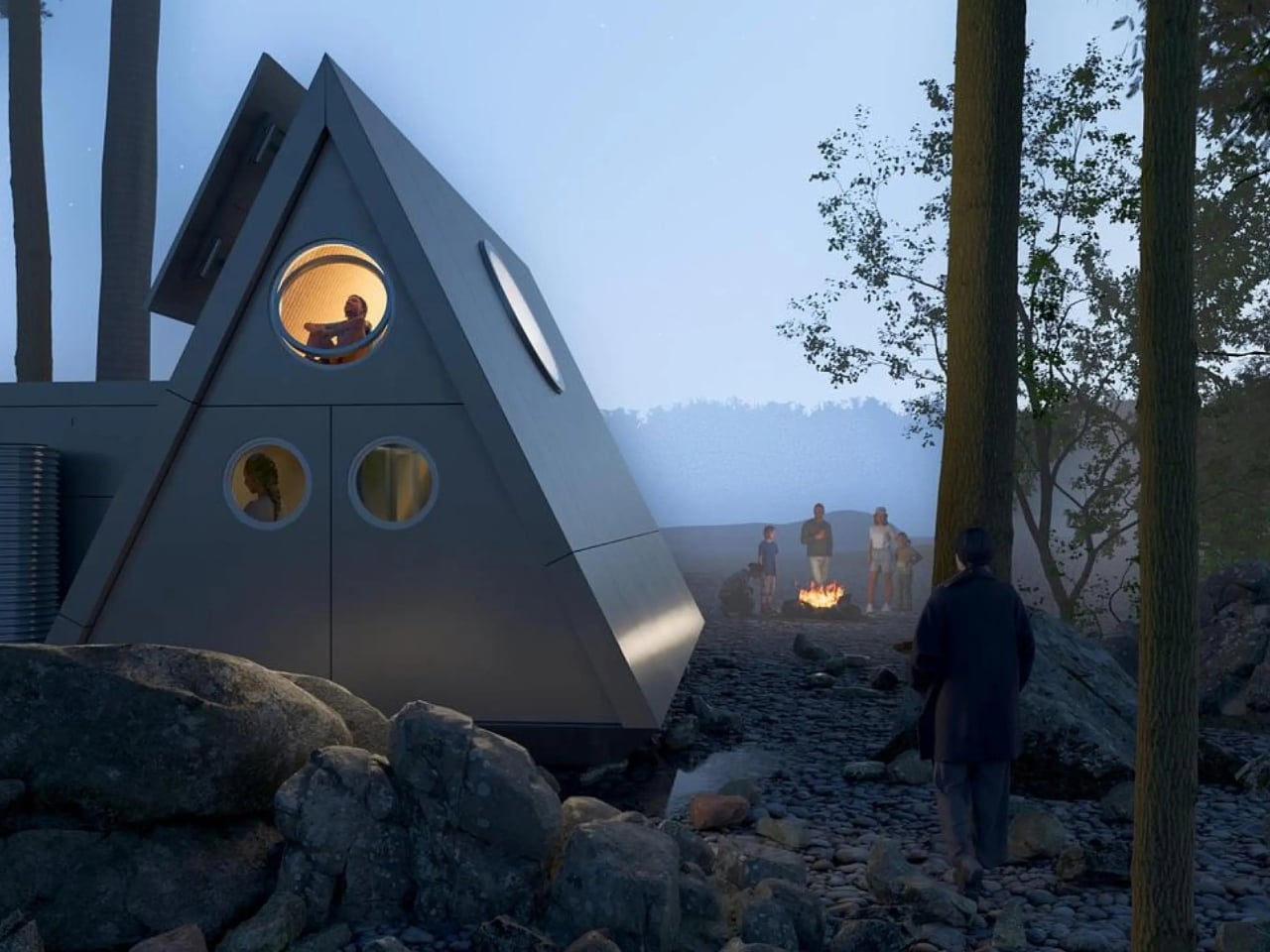
There's a particular magic in a design that understands the trade-off you didn't even know you were making. This folding tiny home walks that line with a wink, hiding a proper mattress where the tent used to live. We've seen tiny homes that prioritize square footage and folding gadgets that prioritize party tricks, but this one gets the assignment: camping is about being outside, not about sleeping on a deflating puddle of nylon. The razor clam here isn't the fold mechanism or the clever cabinetry. It's the audacity to call it a tent at all, then quietly upgrade the one thing that ruins most camping trips: the actual sleep.
We're the ones who circle back to the spec sheet, looking for the detail that makes the marketing copy irrelevant. And here, the detail is that it refuses to feel like camping. That's a bold claim, because camping has a specific, slightly masochistic identity. It's the cold zip of a sleeping bag, the pebbles under your hip, the 3 a.m. realization that you forgot the air pump. This home doesn't just fold; it negotiates. It says, *I can be small, but I won't be miserable.* For our readers, the practical takeaway is sharp: you're not buying a tent that's trying to be a house. You're buying a house that's willing to travel, and it's betting that the mattress is the first thing you'll brag about. We'd tell you to check the weight, check the setup time, and check whether the mattress is actually a mattress or a foam pad with delusions of grandeur. But the core idea, the one that makes you want to start a tab for it, is that someone finally solved the equation of *where do I put my back*.
Now, the honest part. The one we always bring up when something looks this good on paper. We don't know the price. We don't know the shipping date. We don't know if it's a concept render with a heartbeat or a production model with a waiting list. The source material doesn't tell us, and we're not going to invent a number to make you feel better. What we do know is that the desire is real. The moment you see a mattress tucked where a tent floor should be, you start asking questions: Is it insulated? Does it rain inside? Can I stand up? These are the questions the launch video skips, and they're exactly the ones we want answered. So here's the concrete point to watch: the hinge. The fold is the easy part; the hinge is where it either becomes a daily ritual or a stubborn piece of metal you curse at. Pay attention to how it locks, and whether it locks with confidence or with hope. That's the detail that separates a clever idea from a clever idea that actually ships.