U.S. Warns Any Vessel Linked To Iran Could Be Intercepted Worldwide, Blockade Not Limited To Strait Of Hormuz
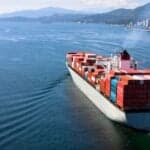


The United States has made it clear that its naval blockade of Iran is not limited to the Middle East, with military officials confirming that ships linked to Iran could be stopped anywhere in the world.
Air Force Gen. Dan Caine, Chairman of the Joint Chiefs of Staff, confirmed that the ongoing naval blockade applies to all vessels travelling to or from Iranian ports, no matter their flag.
He explained that this is a blockade of Iran’s ports and coastline, not of the Strait of Hormuz. Enforcement is taking place both in Iran’s territorial waters and in international waters.
Caine added that US forces in other regions, including the Pacific, have been instructed to track and pursue any Iranian-flagged vessel or ships suspected of supporting Iran.
This includes “dark fleet” tankers that move Iranian oil while avoiding sanctions, insurance rules and tracking systems.
Under the latest instructions, vessels carrying goods that could support Iran may be stopped, boarded and searched outside neutral territory.
The list of contraband includes weapons and ammunition, but also oil, metals like iron and aluminium, and even machinery or electronics if they are believed to have possible military use.
.@thejointstaff Chairman Gen. Dan Caine: “Let me be clear: this blockade applies to ALL ships, regardless of nationality, heading into or from Iranian ports. The U.S. action is a blockade of Iran’s ports and coastline, not a blockade of the Strait of Hormuz. Enforcement will… pic.twitter.com/xGIclPQHmi
— Rapid Response 47 (@RapidResponse47) April 16, 2026
US Central Command said the blockade is being enforced in the Gulf of Oman and the Arabian Sea, east of the Strait of Hormuz, and covers Iran’s entire coastline, including ports and oil terminals.
Any ship entering or leaving this area without permission can be intercepted, diverted or seized. However, ships not linked to Iran can still pass through the Strait of Hormuz, though they may be checked.
Ships approaching the blockade are being warned directly over radio. US Navy personnel tell them not to proceed and warn that they may be boarded or face force if they do not comply.
Military officials said 14 vessels have already turned back in the first three days rather than risk confrontation. Some ships linked to Iran have also slowed down, changed course or switched off their tracking systems.
So far, no vessels have been boarded in the Central Command region, though officials did not confirm whether any action has been taken elsewhere. Earlier in the operation, a US Navy submarine sank an Iranian frigate in the Indian Ocean.
The operation involves a large number of naval and air assets. The US Navy has deployed multiple warships, including Arleigh Burke-class destroyers, along with aircraft, helicopters and surveillance systems.
More than 10,000 personnel are supporting the mission, although officials said this represents less than 10% of total US naval power.
WATCH: @thejointstaff Chairman Gen. Dan Caine details the U.S. blockade of Iran’s ports and coastline: pic.twitter.com/XlL1Pi9Vjo
— Rapid Response 47 (@RapidResponse47) April 16, 2026
Caine described the area as highly congested, with heavy commercial traffic, making operations more challenging for naval crews. He said ships approaching the blockade can clearly see the military presence around them.
Maritime advisories have warned that the security threat level in the region is now critical. Ship operators have been told to monitor VHF Channel 16 at all times, keep AIS transmissions in line with company policy and stay alert to possible threats, including mines and congestion near anchorages.
Humanitarian cargo such as food and medical supplies is allowed, but it will still be inspected before being cleared.
The move comes as a ceasefire between Iran, the United States and Israel is nearing its end, with efforts underway to extend it. US Defence Secretary Pete Hegseth said the military is ready to resume operations quickly if needed, while also indicating that diplomatic talks are ongoing.
He also said Iran’s command and control systems have been heavily weakened, although the country appears keen to maintain the ceasefire. On the situation in the region, he noted that Houthi forces have stayed out so far, following earlier US military action against them.
A US aircraft carrier group heading towards the Middle East has taken a longer route around Africa instead of passing through the Red Sea and Bab el-Mandeb, where there were attacks on shipping in the past.
References: TWZ, UKMTO
Want to read more?
Check out the full article on the original site