Japan Eyes Tiny Pacific Island To Dump Nuclear Waste Amidst Protests By Environmental Groups
Japan’s plan to dump radioactive waste at a small atoll in the Northwestern Pacific Ocean has aroused global concern among environmental groups.
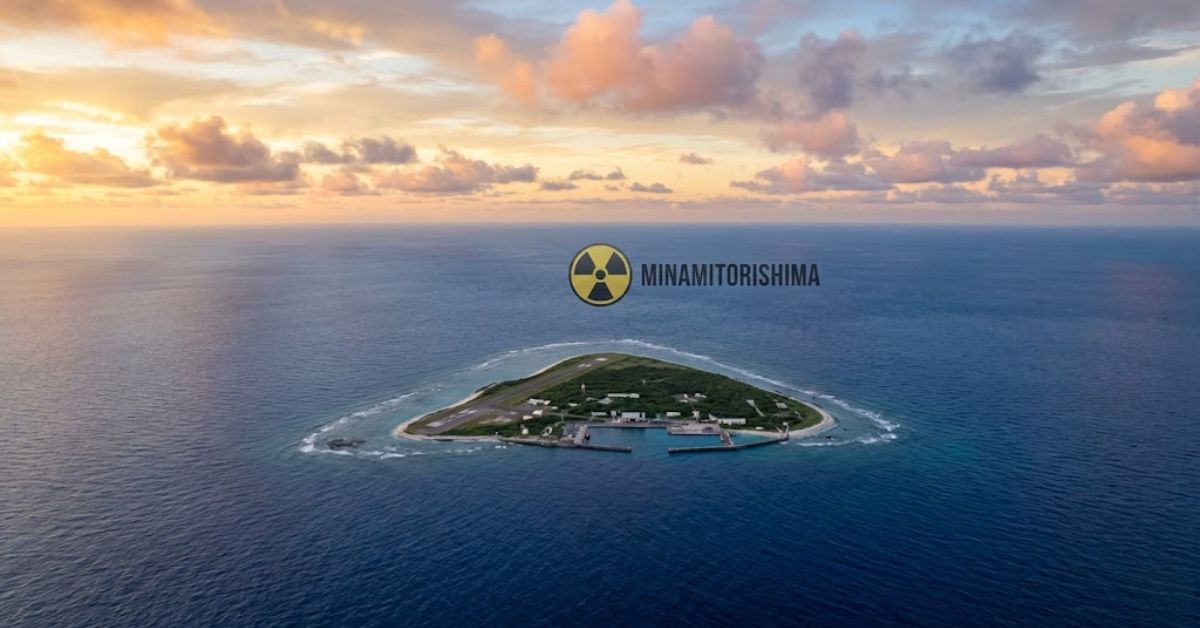
The coral atoll of Minamitorishima is Japan’s easternmost territory, 1,200 miles southeast of Tokyo. It also has rare earth minerals, found on the seabed near the island.
The atoll covers just 1.51 km2 and is isolated, with no residents apart from a few government officials and military personnel.
Its remoteness makes it an attractive destination for burying high-level nuclear waste for up to 100,000 years.
The government wanted to study the feasibility of two other towns in Hokkaido for the same; however, this was not accepted by the locals.
However, this atoll is not inhabited, hence the authorities chose it for the project. It also has basic infrastructure such as a runway and port facilities.
An official request to survey the island for conversion into a nuclear waste dumping site was sent this month by the Nuclear Waste Management Organisation of Japan (NUMO) to Kazuo Morishita, the mayor of the Ogasawara village, who administers the island.
Environmental groups are protesting against this decision, citing the dangers of nuclear waste disposal and the harm it could cause the surrounding ecosystem.
Citizens’ Nuclear Information Centre (CNIC), an anti-nuclear organisation based in Tokyo, stated that the island had not been subject to detailed geological surveys or research to assess its feasibility for the project.
Compared to mainland sites, which have been extensively studied over the past, this island remains largely unexplored.
Additionally, the island’s volcanic base and the porous limestone raise considerable risks about the stability of such a venture.
The island is also prone to storms, typhoons, and sea-level rise, which means any potential underground disposal site must withstand saltwater, extreme weather, and tsunamis.
William A. Parkinson, a senator in Guam, highlighted the logistical challenges in transporting the highly toxic waste to the remote island and ensuring its safe storage and eventual burial.
Japan’s nuclear waste production continues to rise.
Since the country’s first reactor began working in 1966, it has accumulated thousands of tons of spent nuclear fuel and toxic waste, of which 2500 canisters are stored in Aomori and Ibaraki prefectures.
However, these are temporary solutions to a growing problem, and to address this pressing issue, the government wants a permanent repository where it can safely dispose of the nuclear waste by burying it deep underground, at depths of at least 300 metres to prevent contamination.
Finland explored this concept first, after which it developed the first permanent facility to safely dump high-level spent nuclear fuel, called the Onkalo deep geological repository in Olkiluoto.
At this facility, radioactive waste in copper canisters is buried up to 1480 feet deep in granite bedrock to isolate it for 100,000 years.
Taking inspiration from Finland, Japan is also exploring Minamitorishima’s potential for the same.
Want to read more?
Check out the full article on the original site